Pages

Showing posts with label EGI Community Forum 2013. Show all posts

Friday, April 12, 2013

Getting citizen scientists on your team

There are currently four million volunteer computers searching for new pulsars for the Einstein@Home. This sleepy distributed team has so far collectively processed over 1 petaflops. 46 individual pulsars have been discovered this way. Dr Ad Emmen (AlmereGrid) introduced a session yesterday, 'Getting citizens scientist on your team'. Ad roughly calculated that in Greater Manchester alone there could be over 2.5 million computer sitting idly. It is now estimated that there could up anyway up to 2 billion computers worldwide.  The potential growth of this computing capacity is enormous.

One project, International Desktop Grid Federation (IDGF), has been harnessing this processing power.  IDGF brings together those interested in desktop grids including 50 different desktop grids, 50 member orgnisations, and over 240 individual members. 

As an IDGF member, institutes have access to high level science gateways with a host of applications for end users. There is also certification support, a roadmap for guiding the management of desktop grids for administrators, plus a vimeo training channel and a technical wiki.

In June 2012, the monthly performance of the desktop grid virtual organisation (VO) in the EGI portal was an impressive 1,051,051 CPU hours.  It basically held the 10th spot for a while. However, this number fluctuates and IDGF have ambitions to capture more processing power for scientific research. By contrast, the ATLAS experiment uses 100,000,000 CPU hours.

Dr Robert Lovas from MTA SZTAKI introduced IDGF-SP . The idea behind this support programme is to gather experiences, promote success stories and set up a coordinated campaign to boost uptake of desktop grids by institutes, universities and researchers across the globe. It also hopes to encourage the growth of a network of citizen scientists.


What IDGF-SP is currently looking for are ambassadors to bridge the gap between scientists and citizens. Similar to the EGI champions programme, IDGF-SP are hoping to encourage the promotion of desktop grids usage inside and outside scientific organsitions. One of their current ambassadors is Professor Stephen Winter from the University of Westminster. Last year, the university saved £500,000 from deploying a desktop grid (DG).

IDGF-SP was launched in December 2012. Another aim is to build a desktop grid virtual team by:

Promoting the technology in the EGI communities
Adding DG resources to more virtual organisations (VOs)
Collecting spare capacities from VOs
Running new applications on the integrated infrastructure
Finding EGI champion/IDGF ambassadors

The project will collect data in an application super-repository where users can see existing applications and associated metadata (i.e. attributes and implementations etc) and administrators have access to SZDG technical wiki (a consolidated knowledge base for DG related technologies).

Check out our educational website, Volunteer Garage (www.volunteer-garage.org). 

Thursday, April 11, 2013

Another EGI Champion interview: Fotis Psomopoulos

Fotis Psomopoulos develops data-mining algorithms for genomic research and protein modelling, and he is talking about life sciences:

Silvia Olabarriaga discusses bioscience gateways

Silvia Olabarriaga accepted to talk about setting up a gateway for bioscience

Wednesday, April 10, 2013

Malaysian masks and oral history: digital cultural preservation at the EGI Community Forum

Earlier today I had the chance to chat to Dr. Farridah Mohd Noor fron the University of Malaya about her work on digital cultural preservation:


Facilitating the discovery and uptake of software: EMI, DCore, SciencePad

Beyond European Middleware Initiative (EMI) was the subject of a popular EGI session yesterday afternoon. Robert Harakaly spoke about some of the developments with DCore data and knowledge platforms and software, which are rooted in EMI technologies. One solution addresses the need for match-making for scientists with similar issues building an automatic ontology collaboration platforms. Robert is also currently piloting a platform for internal secure enterprise storage system at his own campus at Safarik University Slovakia. There has also been interest outside the academic world from the banking sector in Switzerland, and a new technology project is in preparation examining security in medical data management again also based on EMI services. 

Another project from EMI, addresses another important issue. How do developers really know who is using their software? EMI is very good at developing software but perhaps not as good at advertising or finding out how their middleware has been used. This was a previous concern of EMI Project Director, Alberto Di Meglio.  Last year, EMI set up SciencePad (formerly known as ScienceSoft). This project will try to solve issues in identifying, evaluating and leveraging existing software through re-use.  "It's about following the value chain so the impact of software can be made more apparent,"said Alberto. SciencePad is currently preparing for the operational phase. iSGTW reported on their last workshop on 'Persistent IDs for software workshop' in January. Their next workshop will be on software registries and metadata later this month.  

It’s not only middleware that has that problem with gaining wider recognition and keeping track of its impact. Software is no longer easy to define, says Neil Hong. Neil is the Director for the Software Sustainability Institute (SSI) in the UK. What is required is a simple way of  recognising and monitoring use of a piece of research software.  Neil pointed out that a simple presentation can have a DOI, ORCHID and fig-share, it is more complicated for software because of four considerable problems of "Boundary, Granularity, Versioning and Authorship". 

There were several take-home messages from Neil's talk including the SSI five star of research software. Check out Neil's recent blog for more information. Neil also mentioned the SSI Journal of Open Research Software, which is helping with reusability for software.  SSI also has a top tips page for scientific software. Neil recommended the extensive work of ImpactStory which is developing a framework for measuring impact in non traditional ways by directly monitoring software citations. One day forking a github repository would be as recognised as formally publishing a paper.

Morris Reidel, who chaired the session emphasised the importance of "e-science application enabling".  Information is dense in specific communities, but luckily there is now more coordinated effort to find out what’s happening in the other infrastructure currently.  Towards the end of the session we heard from a community which is trying hard to facilitate software discovery in their domain. The biomedical field is complex covering genomes to systems to everything in between. Julie McMurry from BioMedBridges (a joint effort of ten biomedical sciences research infrastructures on the ESFRI roadmap) introduced a project she is working on building a software/ tools registry. They are collating together information on all types of biomedical software  including web services (REST-style), web UI, desktop GUI, grid enabled tools, command –line tools etc. The software can be filtered attributes and use cases. 

Slides from this session can be found on the EGI website, here


Brook Schofield interview

Project Development Officer of TERENA (Trans-European Reseach and Education Networking Association), and he accepted to talk with us about Eduroam:

Did you say EGI Champion?

Mark Santcroos develops science gateways, workflows and applications for the life sciences. Among others, he is an EGI Champion, and he accepted to answer a few questions:

Tuesday, April 9, 2013

Using the grid to picture the stars

EGI Champion Joeri van Leeuwen is an astronomer who uses grid computing to process images of distant stars and galaxies. We caught up with him at EGICF13 and this is what he said:


The European Grid Infrastructure Community Forum kicks off in Manchester

The European Grid Infrastructure Community Forum kicked off in Manchester this morning. Manchester is famous for many things (architecture, culture, music, science and engineering to name just a few) but arguably is recognised most widely for a certain football team or two. There is a distinct football theme to the artwork for this week’s event, and even Professor Nancy Rothwell, Vice Chancellor of the University of Manchester, recommended in her welcome address that we refrain from discussing it with locals if at all possible.

Peter Coveney, Director of the Centre for Computational Science at University College London presented recent developments in e-Infrastructures that are helping to unlock new science. He outlined the challenges he sees in putting the rapidly growing body of scientific data to use and particularly focused on applications in biomedicine and materials science research. Discussions were around how to fund these activities and Coveney gave some examples of recent UK funding calls.

Kostas Glinos, Head of the e-Infrastructures Unit at the European Commission focused on Horizon2020, which is the European level funding programme set to start in 2014. Glinos noted that the approach to funding will be integrated and service driven. The aim is to provide integrated, de-siloed services and to establish synergies with individual member state’s e-infrastructure development programmes. Horizon2020 will move beyond science to include the science-industry-society triangle, mapping out societal and policy needs and integrating innovation into the process. Key to success is financial sustainability with ‘proper’ positioning on the user pays / provider pays axis, and a governance structure that maximises EU added value. The Commission has several priorities in the e-Infrastructure arena (to stick with the football theme). They are interested in big data, with seamless and open access for researchers. Their strategy for computational infrastructure covers supercomputing and open computing, such as grids and clouds. The funding will also focus on implementing the recommendations of the GÉANT expert group.

As a result, the first projects in Horizon2020 should produce data centric science and engineering, community driven data infrastructures and global coordination for research data. The programme will also aim to fund a series of centres of excellence that will provide training and skills development for HPC. Essentially, the three pillars of their HPC strategy include next generation exascale computing, provision of the best facilities and services for academia and industry, and should achieve excellence in HPC applications. They are also considering Public Private Partnerships to link demand and supply. According to the discussions though, the European Commission should make sure to support researchers to find ways of working with the data. In between gathering, storing and ensuring the long term archiving and labelling of data in an accessible way, researchers actually need to be able to handle the data successfully to produce results in the first place.

Steven Newhouse, Director of EGI, closed the session with a look at the road ahead. “Where have we come from and where are we going?” asked Newhouse. He looked back at the journey from the web to the grid to the discovery of the Higgs particle and asked, where do we go from here? Back in the days of the European Data Grid ten years ago, the grid boasted 4000 cores and 30 sites. In 2013, the infrastructure includes 400,000 cores and 350 resource centres. For EGI, the three areas of innovation that will take the world's largest production grid infrastructure into the future are in community and coordination, operational infrastructure and Virtual research environments. With one year to go before the final whistle blows on the EGI-InSPIRE project, but at least 18 months until Horzon2020 projects start warming up, there are some tough questions to be asked – and answered. The focus has to be on the critical core services - who needs what, and how can we sustain what we currently have? Discussions have been underway in the community for some time, and no doubt will continue intensively this week.

One thing is clear however, developing our human network is vital. You can’t win the game without the right players on the pitch. EGI already fields a network of National Grid Infrastructure Liaisons who focus on supporting the user community from inside the EGI-InSPIRE project. This Community Forum is the first EGI conference that also welcomes EGI’s new champions, a hand-picked team of researchers hailing from communities such as engineering, biomedical science, astronomy and beyond, who are supported financially by EGI to promote grid computing and EGI within their community. Several of them are at the event and you can find them online at http://www.egi.eu/community/egi_champions. If you bump into any of them, please say hello to our latest players and welcome them to the field!

Introduction to #EGICF13!

It doesn't always rain (CC-BY-SA David Dixon)
EGI’s 2013 Community Forum has now begun is earnest. The joy induced in the throng of attendees by the programme of exciting talks is perfectly piqued by an abundance of pies at lunch and fried bread at breakfast. #Properfood. Keeps everyone smiling. We are here, of course, in Manchester…capital (unofficially) of the north of England. As Steve Coogan says to Rob Brydon in Michael Winterbottom’s brilliant The Trip, “the North has an identity of itself. It could be a separate country.”

The industrial revolution, the first commuter railway in the world, the first programmable electronic computer, reinvention after reinvention from Northern Soul to Post-Punk to Acid House to Madchester to the Underground Disco revival (you heard me, Dalston). Famous football teams. Eccles cakes. It all happened here.
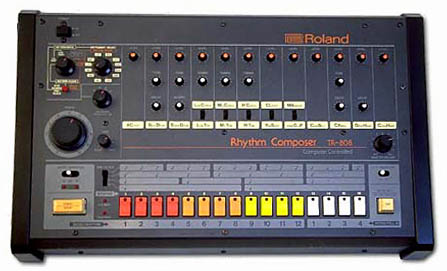
Manchester's 808 State were named after the TR-808
 drum machine, which only had one core. EGI now have
 hundreds of thousands that you can use!

Sorry, I got carried away then, especially when coming from someone who grew up on the other side of the Pennines. It’s been sunny here for Monday and Tuesday, which has made a world of difference, though I hope it rains just so first time visitors get a real flavour of the place. Anyway, before I write a blog post proper, I’d just like to introduce the team.

We have (and I’ll add to this over time if new people join):

David Wallom
Dr David Wallom is the Associate Director for Innovation of the Oxford e-Research Centre, where he leads three different activities, Energy and ICT, Cloud Computing and Volunteer Computing. He has led over 20 research projects in areas such as Cloud utilisation, Smart Energy Grids, Research data management, Green IT, ICT security and institutional repositories. He is a passionate member of the e-Science Community and likes to debate the best way to implement emerging technologies.

Catherine Gater
Catherine has a background in Materials Science and a keen interest in talking about scientific research rather than doing any herself. Catherine is now Chief Administrative Officer and Dissemination Manager for EGI.eu in the Netherlands and is project coordinator for the e-ScienceTalk project.

Simon Hettrick
Simon leads the Software Sustainability Institute's policy team and manages its communication strategy. He works with stakeholders from across the research community to develop policies that support research software, the people who develop that software and the researchers who rely on it. Before working at the Institute, Simon worked for OMII-UK and prior to that he worked in patent law.

Zara Qadir 
Zara has a background in Biological Sciences, and has worked within the fields of e-learning, pharmaceutical marketing and scientific programme and curriculum development. She is now a Dissemination Officer at e-ScienceTalk, and works part-time as a freelance science writer.

Beatrice Bressan
After a degree in Mathematical Physics and a Master's in Science Communication, Beatrice completed a PhD and postdoctoral fellowship in Knowledge Management and Technology Transfer at Helsinki University within the research programs at CERN. She has worked several years in these areas as a researcher, writer and head of communications.

Corentin Chevalier
Corentin is e-ScienceTalk's technical wizard. He's specialized in website conception, (particularly flash, animations and dynamic systems) and doing some grid computing webcasts. He also keeps close track of new technologies and concepts, of which grid computing is a biggie.

…And yours truly, Tony Wilson. I mean, Stefan Janusz
Stefan has always had a passion for communicating and writing about science. After an undergraduate degree and PhD that included research projects on computational chemistry and nanofabrication/biointerfaces, he worked for several years as a science communicator for the MRC. He is really excited about the power and potential of e-science technologies. He also likes old computers and cooking.

Keep watching for news on how the community reacts to all the hottest developments covered at EGICF13. New grid funding models, for instance: are they mad fer it, or have they got a right cob on? Certainly the status quo won’t do (mainly because they’re from London, not Mancunia).