
Yesterday evening was the FET11 gala diner.
A tour on a boat offered us a spectacular view of Budapest:
Showing posts with label FET11. Show all posts
Showing posts with label FET11. Show all posts
Friday, May 6, 2011


Thursday, May 5, 2011
Improving cancer treatments with mathematical models
Science isn’t always intuitive. The evidence of our eyes might tell us that the Earth is flat, but we all know that it’s roughly round and just very very big. 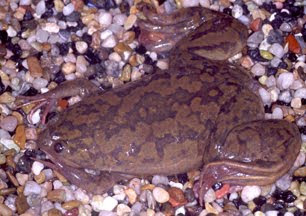
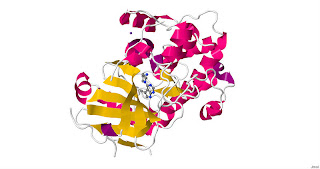
The same non-intuitive ideas can be found in complex systems and sometime mathematical models can help scientists to predict effects that you wouldn’t expect.

Claire Tomlin from UC Berkeley and Stanford University has been using models like these to understand responses to breast cancer treatment, using techniques developed on simple systems such as frog embryo development.
Professor Tomlin comes from a background of aeronautical engineering – in her book, if you have a system you should develop a mathematical model of that system, and then work from there. Taking the example of a plane in flight, you can add the inputs (thrust, elevation angle), measure the outputs (roll, forward velocity) and ensure a smooth flight by controlling the system through a feedback loop.
She showed us how the same types of differential equations she uses in engineering can be applied to biology, for example in the simple case of a species of frog embryo. This particular frog, Xenopus, has a pattern of hairs over its surface that helps it to trap nutrients as it develops. A hairy skin cell is always surrounded by smooth cells, and a smooth cell always has a hairy neighbour. Whether or not a cell is hairy is governed by two proteins – if the ‘hair’ protein is dominant in cell A, it suppresses the ‘smooth’ protein in that cell, giving you a hairy cell. In its neighbouring cell, the presence of ‘smooth’ promotes the influence of the ‘hair’ protein in cell A, giving you a feedback loop. Tinkering with the equations eventually gets you to the point where you can model reality accurately, and from there predict unexpected effects.

From here, Tomlin’s team has gone on to work on much more complex real life systems, including the HER2/HER3 protein pathway in breast cancer. HER2 is a protein found on the surface of certain cancer cells. Some breast cancers have a lot more HER2 receptors than others and the tumours are described as being HER2-positive. Tumours that are HER2-positive tend to grow more quickly than other types of breast cancer, often with a worse outcome for the patient.
High profile drugs have been developed to tackle these types of aggressive cancers, but they only work in about 60% of cases. In the other cases, the drug dramatically reduces the tumour’s growth for around 24 hours, but then the effect wears off and the growth continues more strongly than before. One particular drug, lapatinib, targets the protein AKt, which is involved in cell growth and cell death, known as apoptosis. By knocking back AKt levels in the tumour, this should increase the rate that the cancerous cells die and dramatically reduce the tumour’s growth – except 40% of the time, it doesn’t work, or not for long.
Tomlin’s team worked with the Karolinska Institute and others to model these complex pathways and found a surprising result – if you actually increase the levels of AKt in patients before you start the drug treatment, the outcome is dramatically better. This is a very counter-intuitive approach but the results seem to show that it works. In results only released a couple of weeks ago, cell death rates are improved from around 11% to 50% by boosting AKt levels at the start. Steering the system to a new dynamic equilibrium at the outset seems to do the trick, like flying a plane out of a turbulent patch. It’s early days, but Tomlin’s work could lead to a much better outcome for patients with hard to treat cancers.
Processing the future
Around the European Future Technologies conference in Budapest, there has been a lot of talk of the FET flagship projects. There are six pilot projects, from which two will be selection in 2012/13 to get at least 10 years of funding, of up to 100 million Euros per year. These projects will be the Big Science of the future.
One of the pilot projects is called futurICT (or "futurist"). With several research hubs - the two largest in London and Zurich – the team claim they are going to accelerate knowledge and innovation, allowing better decision making in areas such as well planned cities, sustainability and policy making, by focusing on the key areas of ICT, complexity science and social science.
To me, the most fascinating part of this project is the social science aspects. It’s headed up by Rosaria Conte from the Institute of Cognitive Science and Technologies in Rome, and she says that the bottleneck in social science at the moment is the gap between theory and data; social scientists just don’t have enough data to test real theories in social science. As a result, they've relied on metaphors and hypothesis.
If that’s the case, then we’re now potentially at the turning point in the history of social science. Soon enough, real theories will be able to be modelled and evaluated. It's kind of scary too: can each of us be described and modelled, our behaviour predicted?
Your ego can take some credit in that at least Conte and her peers will require huge advances in data acquisition and in computing power ... but of course, that's what everyone here is counting on anyway. I’ll let the people involved in futurICT tell you the rest themselves:
Visualizing opinions, emerging trends and finanical markets

On 23 January 2011, Portugal held its Presidential elections, re-electing Aníbal Cavaco Silva to a second term. Cavaco Silva won against all other candidates, getting 53% of the vote. But that’s not all there is to the story. There was a surprise hidden in amongst the candidates. Fernado Nobre, a Portuguese doctor who has participated in almost 200 humanitarian missions, was running as an independent. Without the support of any of Portugal’s major political parties, no one suspected he would be popular. So when Nobre collected 14.1% of the vote – more than the traditional candidates supported by the Communist Party, the New Democratic Party and the Greens – everyone was surprised.
Everyone, that is, except Jorge Louçã. Louçã is a computer scientist at Lisbon University Institute who studies ‘opinion dynamics’ on the Internet, by analyzing the content of newspapers, scientific journals, prominent blogs and social media. For two months leading up to the election, Louçã was studying all mentions of the presidential candidates. He knew that while none of the traditional media was covering Nobre, his name was going wild on Facebook. He was clearly popular despite a lack of media coverage.
Louçã is now part of the multi-institutional FuturICT (pronounced “futurist”) project, which aims to understand and manage complex, global, socially interactive systems. His interactive display at the Future European Technologies conference in Budapest last week visualized ‘clusters’ of information on the Internet. For example, when looking at the French newspaper Le Monde, articles about similar topics cluster together (see image). The analysis behind the clustering effect looks at the entire article and then determines it similarity by how many words and strings of words are identical. At Le Monde, articles quickly cluster – around topics such as Osama bin Laden’s death – showing the timeliness of news.
Louçã has also visualized clusters within scientific papers. Looking at computer science papers published on the online repository ArXive.org, these cluster much more slowly than newspaper articles. But this is where the technology could be particularly useful for scientists: “If you look at the last two months, or maybe more, you can be aware of emerging scientific trends as you start to see new clusters,” Louçã said.
That’s just one application, however. What Louçã really has his sights set on is being able to map opinion dynamics from newspapers, blogs and social media and then compare it to financial markets to see if there is a correlation.
Unthinkable
The European Future Technologies Conference and Exhibition this year in Budapest, is really impressive because of all these "coming from the future" technologies presented here.
Well, some of them are directly coming from dreams we had when we were a child.
Could you believe that by thinking, you could control a robot?
Benjamin Hamner, from the CNI EPFL, demonstrated us that is possible. Don't be surprised by his helmet!
Find more about this project.
Well, some of them are directly coming from dreams we had when we were a child.
Could you believe that by thinking, you could control a robot?
Benjamin Hamner, from the CNI EPFL, demonstrated us that is possible. Don't be surprised by his helmet!
Find more about this project.
Wednesday, May 4, 2011
ACROBAN Humanoid robot - Learning as a child
The ACROBAN Humanoid robot is learning from his environment as a child. Olivier LY, from the INRIA and LaBRI (University of Bordeaux), tell us more about this strange robot coming from the future...
Eight-legged, soft-bodied robot

What has eight mechanical arms and is used to explore underwater regions from afar?
Ask Italian biorobotocist Matteo Cianchetti this same question in a year’s time and he’ll show you his brainchild. For a few years now, Cianchetti has been working on designing and building a soft-bodied robot that looks works like the common octopus.
So far, his team have built two arms - they stretch, bend, fit through small holes and grasp objects – which are moved using a playstation controller (which looks simple to use, but looks can be deceiving: it took me several tries before I could grab the moving object using the controller).
Currently, however, most of mechanics for controlling the octopus arms is sitting outside the tank. Cianchetti said the mission for the next year is the “miniaturize, optimize, and embed it all in one body”. Once the eight-legged robot has a body, it will be able to push and pull itself around on coastal floors, retrieving whatever precious objects have not been accessible so far. The researchers don’t know how deep the first robot will be able to go, but as exploration in the dark depths of the sea is incredibly difficult and a smorgasbord of undiscovered ecology, I hope this will soon follow.
One neat feature of the design is that a robot arm wraps around an object automatically. Cianchetti calls it ‘self-adapting grasping’, and what it means for underwater exploration that “you do not have to exactly where the object is in order to grasp it,” he said. The problem of not knowing the location of an object in underwater exploration is a common one – particularly in the depths, where light starts to fade and cameras become useless.
When the octopus arm touches the object, it will encircle the object to grasp it firmly. In traditional robots, there are rigid parts that could damage the precious objects being retrieved. The octopus robot, therefore, would be useful for applications such as underwater archaeology, Cianchetti said.
What everyone at fet11 surely wants to know, however, is whether it will be able to predict the outcome of the next World Cup. But, being an Italian octopus, I’m not sure I’d be willing to believe it anyhow.
Launch of the FET Flagship Pilots: From a robot future to giant artificial brains
This morning, Vice President of the European Commission, Neelie Kroes welcomed us all to FET11 and announced the launch of the FET Flagship Pilots. She sees them as the start of a new era of ICT research in Europe, building on the holistic approach of the Digital Agenda – the unique thing about them is the scale of their ambition. The six best proposals came from areas where Europe is particularly strong – green IT, neuroscience, nanotechnology and materials science, among others.
The six pilot teams will spend the next 2 years putting together detailed proposals. These should not only have a strong scientific component and solid governance structure, but they must also stress the societal benefits. What is in it for the tax payer?
The Six Contenders
 The coordinators of the pilots then gave us a quick run-down of their projects, often aided by impressively slick YouTube-ready video presentations. Hans Lehrach of the Max Planck Institute for Molecular Genetics told us about ITFoM, IT Future of Medicine. ITFoM aims to create a ‘virtual patient’ infrastructure that will help tailor medical treatment to an individual’s genetic makeup. Right now, we have statistical rather than personalised medicine, said Lehrach – which is the equivalent in motor racing terms of taking the battery out of every red car and the spark plugs out of every green one. In practice, this means that trillions of dollars are spent on developing new drugs, say for cancer, which actually make 70-80% of patients sicker than they were before.
Second to impress us was Jari Kinaret of the Chalmers University of Technology, who presented the GRAPHENE project. Graphene was discovered in 2004, winning the 2010 Nobel Prize for Physics. Graphene is literally the new wonder material – the thinnest, most flexible, best conductor of heat and electricity and 300 times stronger than steel. The project aims to coordinate the work already happening around Europe in engineering, IT and health to create a world-beating team, capable of ushering in a new era of carbon for the 21st century.
FuturICT was presented by Steven Bishop of University College London, and will bring together complexity science, social sciences and ICT to facilitate a symbiotic co-evolution of ICT and society, driven by science. At the moment, the interconnectedness of our systems can lead to multiple failures rather than creating the opportunities that connectivity should bring. FuturICT should lead to global ICT systems that are socially interactive, giving better early warning systems for disasters both physical and economic, greater social inclusion and a faster journey for ideas to the marketplace.
Henry Markam of EPFL introduced the Human Brain Project. This will bring together a huge body of knowledge Europe-wide, not only to build biologically detailed models of the brain itself, but also to apply brain-like technologies to IT and artificial intelligence. As a result, the millions of people around the world affected by brain and mental disorders will receive better care and neuromorphic computer chips will benefit IT and robotics research.
Boasting probably the most impressive video so far was the Guardian Angels project, presented by Adrian Ionescu, also of EPFL. These wearable, zero power, autonomous devices will take care of us from cradle to grave. Powered by vibrations, solar power, wind or changes in temperature, these Guardian Angel nanosensors will be able to monitor our health, environment and eventually emotional state. Temperature, blood sugar levels, heart rates can all be monitored imperceptably, remotely and constantly. Environmental sensors could alert us to dangers around us and even warn those in stressful or risky jobs when their emotional state is leading them to harm.
Finally, and probably most closely fitting the ‘science beyond fiction’ description, Paulo Dario of the Scuola Superiore Sant’Anna invited us to consider a robot-assisted (and slightly Blade Runner-esque?) future in RoboCom. Already ubiquitous in many areas of life, new generations of robots will help us out at home, at work and in hospitals with soft bodies and new levels of perceptual, cognitive and emotional capabilities. One of the exhibitors here has brought along a robot octopus that is certainly attracting huge amounts of attention (maybe people are testing out its world cup predicting abilities now Paul the Octopus is no more?)
A dazzling array of future ideas –which two will win? For me, I’m not sure where to place my bets. Possibly on the Guardian Angels and graphene pilots as they seem to have the most ubiquitous reach across so many fields, with the potential to change pretty much everyone’s lives in some capacity. Come back in 2 years to find out!
ECCE Robot presented by Hugo Gravato Marques
The ECCE1 robot is an anthropomimetic robot, mimicking the human body, and controlled with physics-based simulation.
Hugo Gravato Marques, from the Departement of Informatics of the University of Zurich, accepted to present us this amazing project.
You can find more on the oficial ECCE robot website.
Hugo Gravato Marques, from the Departement of Informatics of the University of Zurich, accepted to present us this amazing project.
You can find more on the oficial ECCE robot website.
FET11 opened this morning
FET 11 (The European Future Technologies Conference and Exhibition) has just started this morning in Budapest.
We will of course cover this event for you... You can discover the first images below:
We will of course cover this event for you... You can discover the first images below:
Tuesday, May 3, 2011
e-ScienceTalk at FET11: “Science Beyond Fiction” in Budapest
 e-ScienceTalk is on tour again for FET11, the European Future Technologies Conference, billed as Science Beyond Fiction. The programme certainly looks intriguing, with topics from quantum IT to artificial synapses to brain-chip interfaces. I arrived this afternoon to set up the e-ScienceTalk information booth, and the exhibition space was already alive with robots of all shapes and sizes flexing their cybernetic muscles and blinking their multi-coloured LEDs. I had the slightly eerie feeling that digital eyes were following me around the room everywhere I went…
Neelie Kroes, Vice President of the European Commission will be welcoming us to the event officially tomorrow morning and opening the exhibition. She will also mark the launch of the FET Flagship Pilots. FET Flagships are large-scale research partnerships designed to achieve major scientific and technological breakthroughs in the next 10 years. Neelie Kroes will announce six pilots, that will eventually be whittled down to two winning proposals which will be green-lighted to start in earnest in 2013. We will hear more about each of these pilots at special sessions during the week. Want to know what the next big thing will be to drive science beyond fiction? This could be the space to watch…
Subscribe to:
Posts (Atom)

 Posts

